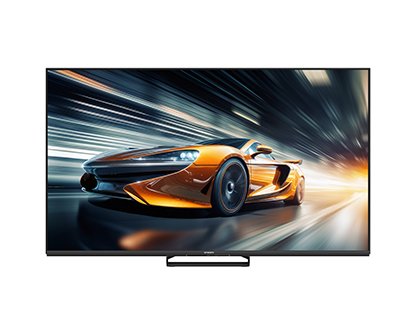
Gaming TVs, a relatively new product category, are designed specifically for gaming—hence the name.
At first glance, they might seem like an odd hybrid. After all, why choose a "gaming TV" when you could use a gaming monitor for play and a regular TV for viewing? Yet, despite the overall decline in the traditional TV market, gaming TVs have bucked the trend, enjoying steady growth in sales.
According to the latest data, Australia’s TV market showed weak performance in 2024, but gaming TVs emerged as a standout segment.
GfK reports that total TV sales in Australia reached approximately 2 million units in 2024, marking a modest 3% year-on-year increase. However, demand for gaming TVs surged significantly.
The Interactive Games & Entertainment Association (IGEA) revealed that Australian consumers spent **A$4.4 billion** on video games and gaming hardware in 2023, up 5% from the previous year. This trend highlights consumers' continued interest in gaming-related products, even amid economic pressures.
Additionally, as consumers increasingly seek larger screens and higher visual quality, gaming TVs—with their high refresh rates and low input lag—have met these demands, further driving their market share.
In summary, while the broader TV market faces challenges, gaming TVs have thrived thanks to their unique advantages, becoming a key growth driver.
So, what exactly sets gaming TVs apart?
The most noticeable difference is the refresh rate. While standard TVs typically offer 60Hz, gaming TVs often support 120Hz or higher.
Why does this matter?
If you' ve ever tried gaming on a regular 4K TV instead of a monitor, you may have noticed:
Lower responsiveness – Actions feel delayed (input lag of 80ms or more).
Motion blur – Slow pixel response causes smearing in fast-paced scenes.
A high refresh rate minimizes these issues, delivering smoother gameplay.
Many gaming TVs also feature VRR, which synchronizes the display's refresh rate with the game's frame rate. This eliminates screen tearing and stuttering, ensuring a seamless experience.
Compared to gaming monitors (usually under 30 inches), gaming TVs often start at 55 inches or larger. The expansive screen enhances immersion, making it ideal for:
Sports games
Local multiplayer
Cinematic single-player titles
TVs often include dedicated image processors (e.g., Sony's XR Chip) that optimize visuals for vibrancy and detail, unlike monitors, which prioritize color accuracy for professional work.
With brands like Samsung, LG, Sony, TCL, Hisense, and Skyworth (with its G6E PRO Gaming TV) competing in this space, how do you pick the right one?
Key Considerations
Full-Spec HDMI 2.1 (40Gbps+ Bandwidth)
Avoid misleading claims—some "HDMI 2.1" ports only support 18Gbps (HDMI 2.0 speeds).
True gaming TVs need 40-48Gbps for 4K@120Hz.
Native 120Hz Support (Not MEMC-Fake 120Hz)
Some TVs use MEMC (motion interpolation) to simulate 120Hz, which can cause artifacts and lag.
Ensure the panel, chip, and HDMI port natively support 120Hz.
Input Lag Below 20ms
Standard TVs often have high latency (50ms+).
Gaming TVs should keep input lag under 20ms for real-time responsiveness.
The gaming TV trend took off with the 2020 launches of the Xbox Series X, PS5, and NVIDIA RTX 30-series GPUs, pushing demand for high-refresh, low-latency displays.
Since 120Hz panels are now widely available, more brands are entering the market. However, not all "gaming TVs" are equal—consumers must look beyond marketing claims like "4K 120Hz" to avoid subpar products.
Currently in the growth phase, gaming TVs are poised to become a major driver of the TV market, especially as big-screen gaming gains popularity. The next evolution of this category could bring even more innovation—stay tuned.


 sales@skyworthau.com
 English
 français