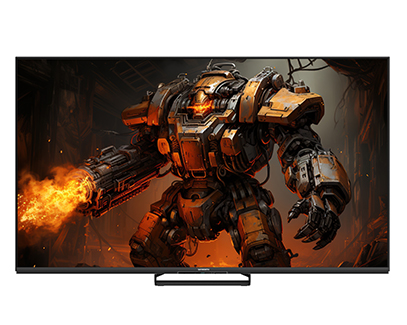
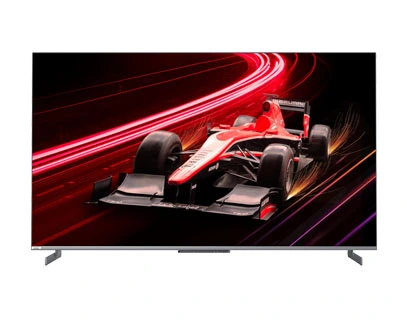
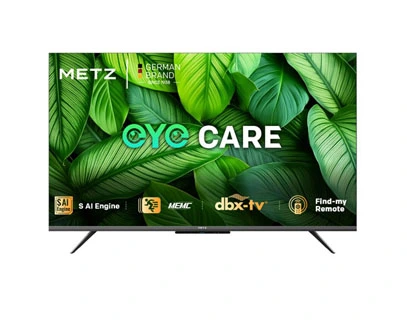
Choosing between Mini LED, QLED and OLED can be confusing because each technology improves picture quality in a different way. For Australian households, the right choice depends on room brightness, contrast expectations, gaming habits, preferred content and budget rather than on which display technology is newest.
Mini LED focuses on high brightness and more precise local dimming. QLED uses quantum dots to enhance colour and brightness, while OLED uses self-emissive pixels that can switch off individually for exceptionally deep blacks. Understanding these differences makes it easier to select a TV that actually suits the room where it will be used.
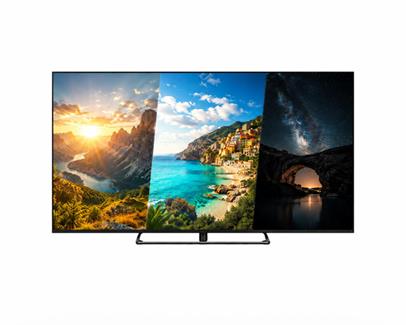
Mini LED, QLED and OLED mainly differ in how the screen produces and controls light, which affects brightness, black level, contrast and colour performance.
Mini LED remains an LCD-based display technology, but it uses much smaller LEDs in the backlight. Because more LEDs can be grouped into local dimming zones, the TV can control bright and dark areas more precisely than a conventional LED TV.
QLED is also based on an LCD panel, but it introduces a quantum-dot layer designed to improve colour volume and brightness. This makes QLED particularly suitable for users who want vivid colours in bright living spaces.
OLED works differently. Each pixel creates its own light and can switch completely off. This allows OLED to produce true black at pixel level and exceptionally high perceived contrast.
| Technology | Lighting Method | Main Strength | Main Consideration |
| Mini LED | LCD + Mini LED backlight | High brightness and local dimming | Some blooming can remain |
| QLED | LCD + quantum-dot layer | Strong brightness and colour volume | Blacks depend on backlight control |
| OLED | Self-emissive pixels | Deep blacks and pixel-level contrast | Bright-room performance varies |
None of the three is automatically superior for every household. Their advantages become clearer once room conditions and viewing habits are considered.
Mini LED and QLED are both strong choices for bright rooms because they can produce high screen brightness, although Mini LED usually provides more precise local dimming.
Australian living rooms often include large windows and strong daylight. In these environments, brightness matters because a dim display can lose impact when ambient light reflects from the screen.
QLED performs well because quantum-dot technology supports bright, saturated colours. It is therefore suitable for sports, news, daytime streaming and family entertainment.
Mini LED adds another advantage: finer control of the backlight. Local dimming can reduce light leakage into darker image areas while preserving bright highlights. This creates stronger perceived contrast even when the room itself is well lit.
For buyers comparing a mini led tv australia option, brightness should therefore be evaluated together with local dimming, screen reflection control and viewing distance rather than as a single specification.
OLED usually provides the deepest blacks, while Mini LED generally delivers stronger peak brightness and more flexible performance in mixed lighting conditions.
OLED's main advantage comes from self-emissive pixels. A pixel displaying black can simply turn off, allowing bright highlights to appear directly beside dark areas without relying on a backlight zone.
This is especially noticeable in dark films, science-fiction scenes and night-time viewing, where black level and shadow detail strongly influence perceived picture quality.
Mini LED cannot switch off each LCD pixel individually, but thousands of smaller backlight LEDs allow much more controlled illumination than traditional LCD TVs. This can produce impressive HDR highlights while maintaining strong dark-scene performance.
For users looking for the best mini led tv australia experience, Mini LED may be the more practical choice if the same screen is used for both daytime television and night-time movies. OLED is often more attractive when dark-room cinematic performance is the priority.
QLED prioritises brightness and colour performance, while OLED prioritises black level, contrast and precise pixel-level light control.
A SKYWORTH QLED TV can be a practical option for family rooms where sports, streaming, children's content and normal television are watched throughout the day. Strong brightness helps images remain lively under ambient light.
OLED is especially effective when viewers care about subtle dark-scene details, cinema-style contrast and wide viewing angles. Because pixels emit light independently, black areas remain dark even when bright objects appear nearby.
Buyers should also consider long-term usage patterns. A household that watches varied content in a bright room may prefer QLED, while movie-focused users with controlled lighting may value OLED more highly.
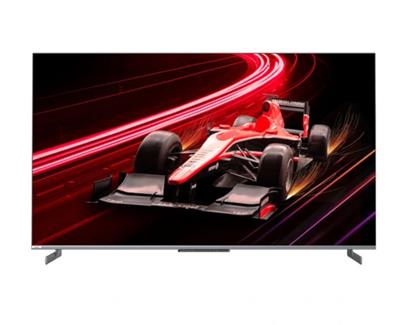
The best gaming TV depends more on refresh rate, input lag, VRR, ALLM and HDMI support than on whether the panel is Mini LED, QLED or OLED.
Gamers should focus on a few practical features:
120Hz or 144Hz refresh rate: provides smoother motion with compatible consoles and PCs.
VRR: synchronises display refresh with changing game frame rates.
ALLM: automatically activates a lower-latency gaming mode.
HDMI 2.1: supports modern high-bandwidth gaming features, depending on implementation.
A mini led 144hz TV can be particularly attractive because it combines gaming responsiveness with high HDR brightness. SKYWORTH Australia offers Mini LED models supporting 4K at 144Hz, VRR and ALLM, which makes this technology relevant for modern console and PC gaming.
OLED is also excellent for fast gaming because of its very quick pixel response, while QLED remains competitive when high brightness is important.
The best display technology changes with content because movies, sports and everyday family viewing place different demands on brightness, contrast and motion performance.
For movies watched in a dark room, OLED has a clear advantage in black level and shadow detail. Buyers interested in cinematic viewing can explore a SKYWORTH OLED TV when deep blacks and high contrast are major priorities.
Sports viewers often benefit from brighter displays because matches are commonly watched during the day. Mini LED and QLED are therefore strong options for open-plan living rooms where sunlight is difficult to control.
For general family use, QLED+ and Mini LED provide a balanced combination of brightness, colour and versatility. Rather than buying a TV around one favourite movie or game, households should consider how often the screen is used for streaming, free-to-air TV, sports, gaming and casual daytime viewing.
The best TV technology is the one that matches your room lighting, content preferences and gaming requirements rather than the one with the most premium label.
Choose Mini LED if you want strong brightness, good HDR impact, effective local dimming and gaming performance in a bright or mixed-use room.
Choose QLED if vivid colour, high brightness and everyday versatility are the main priorities.
Choose OLED if you primarily value deep blacks, cinematic contrast and dark-room movie performance.
SKYWORTH's range across Mini LED, QLED and OLED reflects this broader market reality: different technologies are designed for different viewing priorities. The most useful buying decision comes from matching the display to your actual home environment.
Is Mini LED better than OLED?
Not universally. Mini LED generally offers stronger brightness, while OLED provides deeper blacks and pixel-level contrast.
Is QLED the same as Mini LED?
No. QLED refers to quantum-dot colour technology, while Mini LED refers to the backlight technology.
Which TV is best for a bright living room?
Mini LED and QLED are usually the strongest choices because they can achieve high brightness.
Is Mini LED good for gaming?
Yes. Models supporting 120Hz or 144Hz, VRR and ALLM can be very suitable for modern gaming.
Which TV technology has the best black levels?
OLED generally provides the deepest blacks because individual pixels can switch completely off.
Which technology is best for everyday family viewing?
Mini LED and QLED offer excellent versatility, while OLED is particularly attractive for movie-focused households.
 sales@skyworthau.com
 English
 français